

Every winter, ice damming on roofs causes thousands in water damage across Illinois homes. Left untreated, ice dams can back up under shingles, leak into ceilings, rot attic structures, and trigger mold growth in insulation.
Here at Royal Craft Home Remodelers, we understand that these problems endanger more than just property. They also endanger the building’s energy efficiency, air quality, and potential structural stability in the future. We offer targeted, professional ice dam removal services in Downers Grove, without damaging your roof or upselling you a full replacement.
Ice dams don’t appear overnight, but once they do, they can cause serious and expensive damage fast. Understanding how they form is the first step to preventing them.
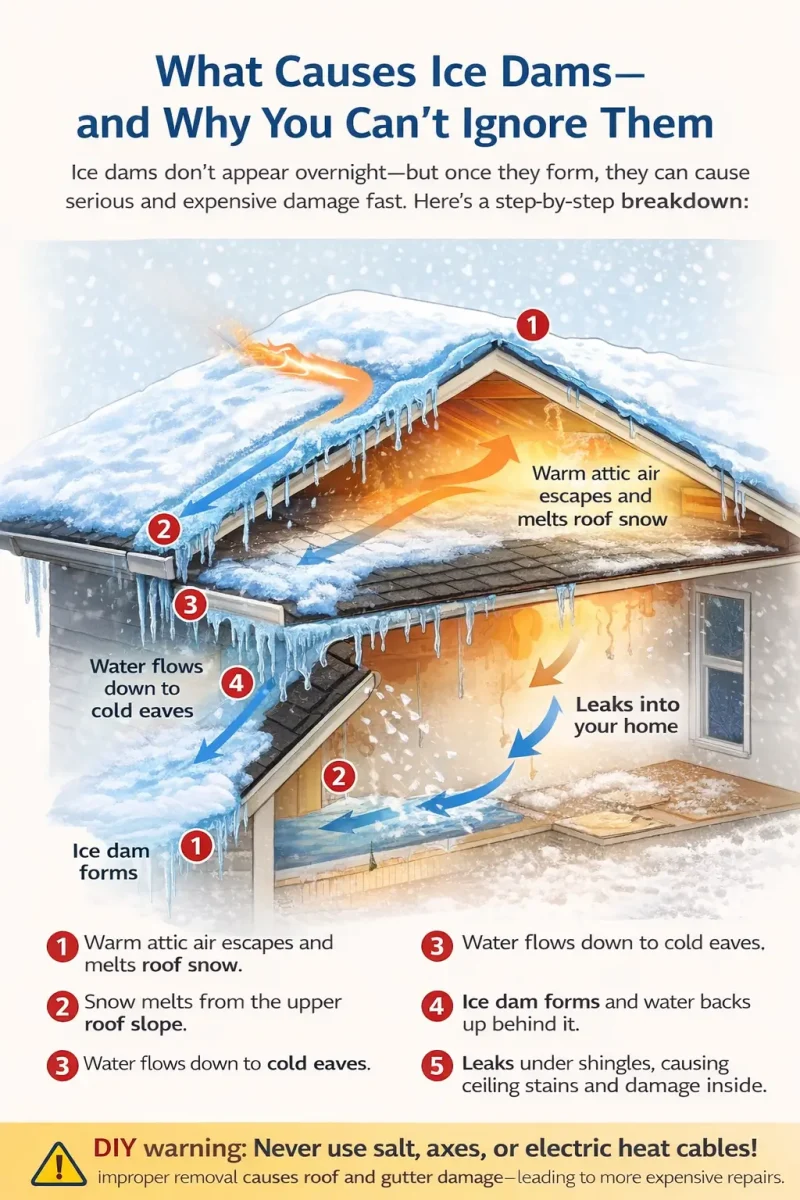
You can’t just shovel off snow and call it a day. Once an ice dam is established, it becomes a cycle of melting and refreezing. DIY fixes like salt or hacking at the ice can damage shingles, void warranties, and make leaks worse.
Royal Craft uses thermal imaging, safe steam removal, and attic airflow diagnostics to both treat and prevent ice damming. That’s how we protect your home beyond surface-level fixes.
We help homeowners and property managers make smart decisions based on risk level, property age, and structural vulnerabilities.
| When Ice Dam Removal Is the Immediate Fix | When Prevention Upgrades Are Warranted |
|---|---|
| You have visible ice build-up and leaks starting | Recurring ice dams every winter |
| Water stains just appeared indoors | Poor attic insulation or blocked airflow |
| Attic ventilation is unverified or obstructed | Older roofing systems lacking drip-edge or underlayment |
| Roof has no prior ice & water shield installed | Roof lacks protection for freeze-thaw cycles |
⭐⭐⭐⭐⭐
3 months ago
“We recently had our roof replaced by Royal Craft, it exceeded all of our expectations. The team was skilled, efficient, and paid attention to every detail. Mau, the owner, was incredibly involved, keeping us informed and ensuring everything met our expectations.”
Illinois winters don’t just bring snow, they bring unpredictable freeze-thaw cycles that wreak havoc on roof systems. Cities like Downers Grove, Naperville, Rockford, and Chicago are especially vulnerable due to wide temperature swings, aging construction, and heavy overnight snowfall. These conditions create the perfect environment for ice dams to form, expand, and back up into homes.
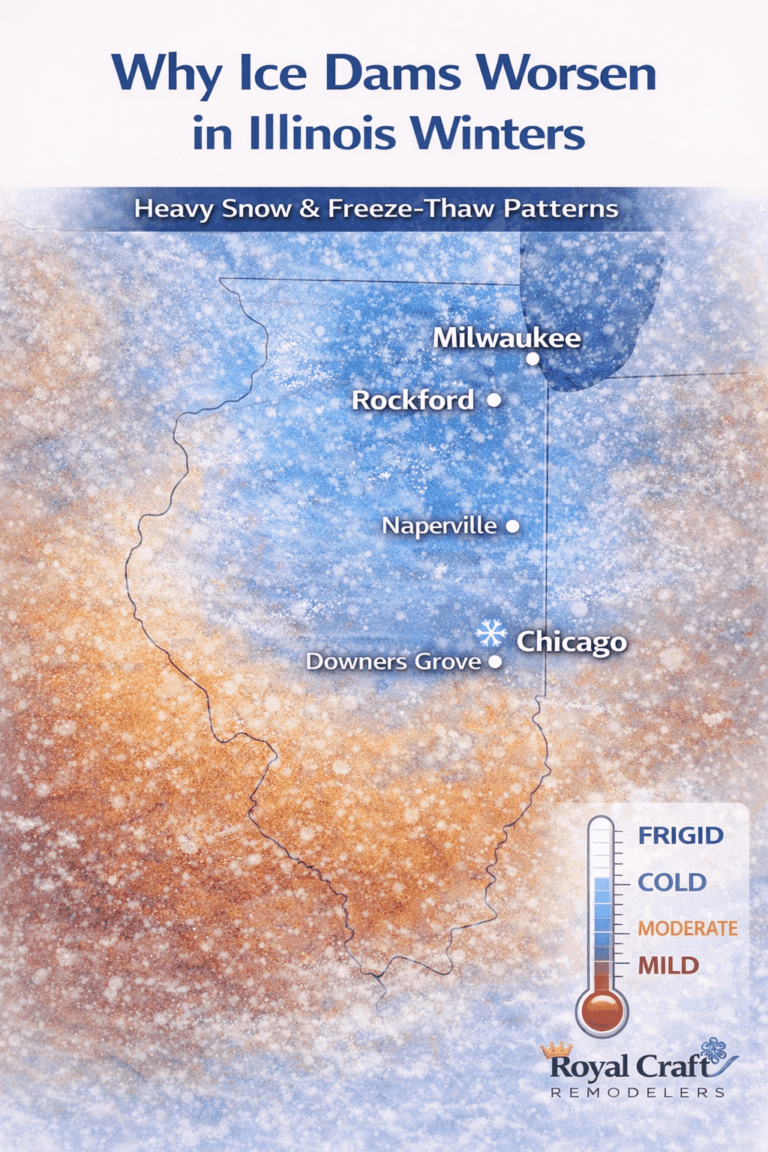
Freeze-Thaw Map: Ice Damming Risks Across Illinois
Frequent snowstorms followed by temperature swings make areas like Downers Grove, Naperville, and Rockford especially vulnerable to ice dam formation. This visual shows how Midwest climate patterns impact roof damage potential in winter.
Stay alert for snow buildup, warming trends, and other factors that trigger ice damming. Use the live weather map below to monitor freeze-thaw cycles across your area.
When snow melts during the day and refreezes at night, it traps water under shingles, overflows gutters, and floods soffits. These repeated thermal shifts weaken your roofing materials and spike the risk of attic leaks, insulation damage, and long-term mold exposure.
If your home has:
…then your roof is high-risk during every Midwest winter.
Royal Craft responds fast before the leak starts. We specialize in:
Let our team help you stay ahead of winter damage, with proactive care, not panic repairs.
Removing an ice dam early can prevent thousands in ceiling repair, drywall replacement, and mold remediation. We recommend:
Prevention upgrades in early fall or spring (before the freeze returns)
Unlike some companies that use chisels or salt (which void warranties), we use:
How We Safely Remove Ice Dams in Illinois
From thermal roof scans to shingle-safe steam removal, this 5-step process ensures your roof is cleared without damage, and your attic is protected long-term. Serving Downers Grove, Naperville, and the greater Chicago suburbs.
⭐⭐⭐⭐⭐
“Bill and his crew are very knowledgeable, professional, and clean. We were extremely pleased with their attention to detail and high-quality workmanship and materials. The whole installation process ran smoothly, highly recommend Royal Craft!”
We’re trained to service:
→ We match repairs and upgrades to your existing roofing system for warranty protection.
Factory-trained on GAF systems and authorized to install their premium shingle lines with full manufacturer warranty coverage.
Fully licensed and insured for every project, protecting your home and investment from start to finish.
Proudly serving Illinois’ western suburbs with trusted, neighborhood-focused roofing services.
Recognized for exceptional customer satisfaction and accredited by the Better Business Bureau.
Providing personalized roofing solutions across 20+ Illinois locations, tailored to each community’s needs.
An ice dam is a ridge of ice that forms at the edge of a roof, blocking melted snow from draining. As water backs up behind the dam, it can leak under shingles and damage ceilings, walls, insulation, and drywall. It’s one of the leading winter causes of interior water damage in Illinois homes.
We use commercial-grade steam equipment, not hammers, salt, or chisels. This allows us to melt the ice safely without harming your shingles, granules, or roofing system. Steam is the only method approved by major manufacturers like GAF® and CertainTeed®.
No. Chipping ice off your roof can damage shingles, crack gutters, and make the situation worse. It also puts you at risk for injury. DIY attempts often void warranties. It’s safest to call a licensed ice dam removal expert with the right tools and training.
Watch for these signs:
If you notice any of these, schedule a thermal roof scan or drone inspection right away.
It might, unless the root cause is addressed. Ice dams usually result from poor attic ventilation, insulation gaps, or air leaks. After we remove the dam, we offer prevention services like air sealing, adding baffles, and correcting airflow issues to stop future problems.
Do you offer emergency ice dam removal in Downers Grove?
Yes, we serve Downers Grove and surrounding areas with same-day emergency response. During heavy snow or thaw events, we prioritize homes with visible leaks or active ceiling damage. Contact us now to schedule urgent service.
Can I get a quote before you do the work?
Absolutely. We start with a free visual roof inspection or thermal scan and provide a clear estimate before beginning removal. No surprises, no pressure.
When it comes to ice dams, timing isn’t just important, it’s everything. The longer water sits behind the dam, the more damage it causes to your insulation, ceilings, drywall, and roof decking.
That’s why Royal Craft offers:
✅ Steam-only removal (no damage to shingles)
✅ Drone and thermal imaging to pinpoint trouble zones
✅ Attic airflow and insulation diagnostics
✅ No-pressure quotes and fast local scheduling
Whether you’re seeing ceiling stains or just worried about what’s under that snow, we’re here to help, before the next thaw hits. Call now or book online to get your FREE winter roof scan. Serving Downers Grove, Naperville, Aurora, and the greater Chicagoland suburbs.
Most ice dam removal companies show up after the damage is already done. Royal Craft prefers to solve the underlying problem. Ice dams form because heat escapes through the ceiling into the attic, warms the roof deck, melts the snow above it, and lets water refreeze at the cold eaves. The cure is not steam. The cure is proper attic ventilation and insulation.
Mauricio, who joined Royal Craft as partner in 2023, brings a specialty in attic conditioning and ventilation from years of commercial roofing work. He knows what most residential roofers do not: an airtight roof over an undervented attic causes more damage than a leaky roof over a properly conditioned one.
On homes that have had repeated ice dam issues, we recommend a full inspection of the attic, roof deck, insulation, and ventilation together. Ridge vents, soffit vents, powered ventilation, and insulation upgrades are the long-term fix. Once the attic breathes properly and stays cold, the roof stays cold, and the snow does not melt in the first place.
See our attic insulation and ventilation page for how we scope the full solution, or read about our roofing services if the underlying roof also needs attention.
These are the trust questions we get most from homeowners dealing with an active ice dam or planning ahead of the next storm:
Ice dam customers usually come to us in a panic, worried about ceiling stains and roof damage. What they tell us afterward is that we took the time to explain what was actually happening in the attic. Here is a review we hear versions of constantly:
“It was a pleasure working with you guys. You really know what you’re doing and kept us informed the whole way. You made it super easy for us to understand everything.”
More reviews on our Reviews page or read verified neighborhood recommendations on our Nextdoor page.